
Automotive Suspension Springs: Coil, Leaf & Heavy Duty
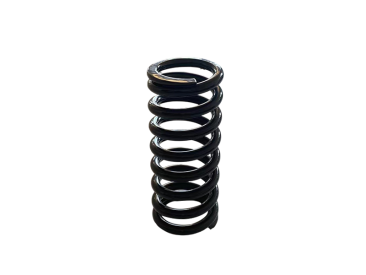
High-quality automotive suspension springs for passenger cars, commercial vehicles, trailers, off-road and other suspended applications – coil, leaf and heavy-duty springs can be manufactured to your drawing, sample or ride specification. CHENJI is an ISO 9001 certified spring manufacturer (since 2014, 26-50 employees, 35 spring machines) exporting OE and aftermarket suspension springs worldwide. We wind from carbon, alloy and chrome-silicon spring steel and confirm load, rate, envelope and surface finish before production, so the springs drop straight into your application.
Overview
A suspension spring sits between the vehicle body and its wheel to absorb road shock, carry the vehicle load and keep the tyre in contact with the road. Coil springs handle vertical load with high accuracy, while leaf springs are chosen for heavy commercial loads. Progressive and dual-rate designs change stiffness as the suspension compresses, giving both comfort and load capacity in one spring.
Modern automotive springs are hot- or cold-coiled, then heat treated, preset (scragged) and often shot-peened to improve fatigue life. We design the spring rate from wire diameter, mean coil diameter, active coils and material modulus, and each batch is checked for free length, load and rate tolerance before dispatch.
Rate Types & Construction
Suspension springs are classified by how the spring rate behaves through the suspension travel.
Constant-rate (cylindrical) springs
The classic cylindrical coil with a uniform pitch. Rate stays constant through travel, giving predictable handling – standard on most passenger cars.
Variable-rate (progressive) springs
Barrel, conical or tapered-pitch springs whose rate increases as they compress. They give a comfortable soft ride when lightly loaded and stiffen under load – ideal for vehicles that carry varying loads.
Dual-rate springs
Two-rate designs that switch from a soft initial rate to a firmer rate part-way through travel, often with a helper coil.
Front and rear sets
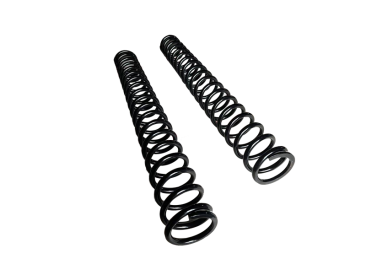
Springs are tuned differently front and rear for balance, pitch control and load distribution – supplied as complete vehicle sets.
Preset and shot-peened
Scragging (presetting) sets the spring and stabilises free length; shot peening puts beneficial compressive stress on the surface for fatigue life.
Applications
- Passenger cars: coil spring and strut springs
- Commercial vehicles and trucks: heavy-duty leaf and coil springs
- Trailers and utility vehicles
- Off-road and SUV suspension systems
- OE and aftermarket replacement springs
- Shock absorber and suspension strut springs
Technical Parameters Explained
Spring rate: Force per millimetre of compression (N/mm). It sets the ride frequency and must match the vehicle’s sprung weight.
Fatigue life: Suspension springs must survive millions of cycles. Shot peening, material cleanliness and controlled surface finish are what make high fatigue life possible.
Preset (scragging): Compressing the spring beyond its elastic limit once, to solid height, settles the material and stabilises free length – every quality suspension spring is preset.
Free length: The unloaded length, which sets the static ride height when the vehicle weight is applied.
Wire diameter: Primary factor in rate and strength; combined with coil diameter it defines the spring envelope.
Coil diameter: Mean coil diameter must fit the spring seat and strut tower while providing the required rate.
Solid height: Length at full compression – must be below the available suspension travel under full bump.
Surface protection: Powder coating or epoxy protects against stone chips and road salt, the main corrosion threats.
Specifications & Range
| Spring types | Coil springs, leaf springs, progressive and dual-rate springs |
| Materials | 60Si2Mn alloy steel, 51CrV4 chrome-vanadium, chrome silicon (typical; confirmed per drawing) |
| Wire diameter | Factory capability 10–80 mm; automotive spring wire typically 3 – 25 mm (confirmed per drawing) |
| Spring rate (stiffness) | Calculated per application – load, deflection and rate confirmed per drawing |
| End configuration | Closed & ground, closed, plain |
| Fatigue improvement | Shot peening, presetting (scragging), stress relieving |
| Surface treatment | Powder coating, electrophoretic (e-coating), zinc plating, oil tempering (typical; confirmed per drawing) |
| Standards | GB/T, DIN, JIS or custom per drawing |
| MOQ | From 10 pcs for standard sizes (typical; confirmed per drawing) |
| Lead time | Samples ~5 days after drawing approval; production within 7 – 15 working days |
Materials & Surface Treatment
Materials used:
- 60Si2Mn – silicon-manganese spring steel, good strength and fatigue for passenger-car coil springs
- 51CrV4 – chrome-vanadium alloy, high fatigue resistance for heavy and dynamic duty
- Chrome silicon – high stress tolerance for compact, high-load suspension springs
Process: hot- or cold-coiling, heat treatment, presetting (scragging) and shot peening before surface finishing. Shot peening introduces compressive stress on the wire surface and is the key step for long fatigue life on suspension springs.
Material and process are matched to the vehicle class, load and expected cycle life. Send the application details and our engineers confirm grade, rate and finish before production.
OEM Customization
Send vehicle details, ride height targets and load data – we develop, test and produce the spring set for your application.
Send Vehicle Data
Vehicle model, axle weights, travel and seat geometry - we design the spring.
Sample & Testing
Prototype springs are preset, shot-peened and fatigue-tested to your cycle target.
Batch Production
Production with load testing, coating inspection and packaging for vehicle sets.
Frequently Asked Questions
Q: What is the difference between coil springs and leaf springs?
A: Coil springs are compact helical springs that give accurate vertical ride control and are used on most passenger cars. Leaf springs are long flat steel strips stacked in a pack, chosen for heavy commercial loads and axle location. We make both and recommend based on your load, ride and installation space.
Q: Do you produce OEM or aftermarket automotive springs?
A: Both. We manufacture to OE drawings and dimensions, and also make aftermarket replacement springs at the correct rate and travel. For aftermarket work we often measure an existing spring or receive a sample so the replacement matches the original performance.
Q: How do you improve fatigue life and corrosion resistance?
A: Fatigue life is improved by shot peening, presetting (scragging) and stress relieving after heat treatment. Corrosion resistance is added with powder coating, electrophoretic (e-coating) or zinc plating. We select the combination according to the operating environment and expected cycle life.
Q: Can you make suspension springs to my drawing or sample?
A: Yes. Send a drawing, CAD file, OEM part number or a physical sample. We confirm wire diameter, free length, spring rate, ends and surface finish before production, and full load/rate testing is available.
Q: What is the MOQ and lead time for automotive springs?
A: Standard sizes start from 10 pcs. Samples typically ship about 5 days after drawing approval, and production is normally within 7 – 15 working days depending on quantity. We confirm both with your inquiry.
Need Suspension Springs?
Email liu@chenjisprings.com | WhatsApp +86 158 5311 1612 | We reply within one working day.
Product Gallery
Related Spring Types & Tools
Design Information & Applications
Key Design Parameters
Automotive suspension springs absorb road shocks, keep the tire in contact with the road and maintain ride height and handling. They are designed to automotive tolerances and fatigue-tested to survive millions of load cycles on real road profiles.
| Parameter | Description |
|---|---|
| Material | SUP9, SUP11A, 50CrVA, 60Si2MnA or chrome-silicon alloy steel |
| Wire Diameter | 8-18 mm standard; custom per vehicle and suspension layout |
| Form | Helical coil (front strut, rear coil), conical / barrel shapes for space saving |
| Load & Travel | Ride loads typically 3-15 kN per spring; free length and stroke per OEM spec |
| Surface Treatment | Shot peening + powder / e-coat finish for corrosion and fatigue life |
Typical Applications
Automotive suspension springs deliver ride comfort, load support and handling stability across passenger cars, light trucks and specialist vehicles.
- Automotive suspension springs — front and rear coil springs for cars and light trucks
- Compression springs — general coil spring engineering and manufacturing
- Railway suspension springs — heavy vehicle ride-engineering capability
- Extension springs — tension elements for seat and mechanism applications
- Spring calculator — design and dimension your coil spring
Request a Quote
Send your spring drawing, wire diameter, number of active coils and load spec and we will confirm a competitive quotation within one working day. Contact us at liu@chenjisprings.com or WhatsApp +86 158 5311 1612.