
Secondary Suspension Springs
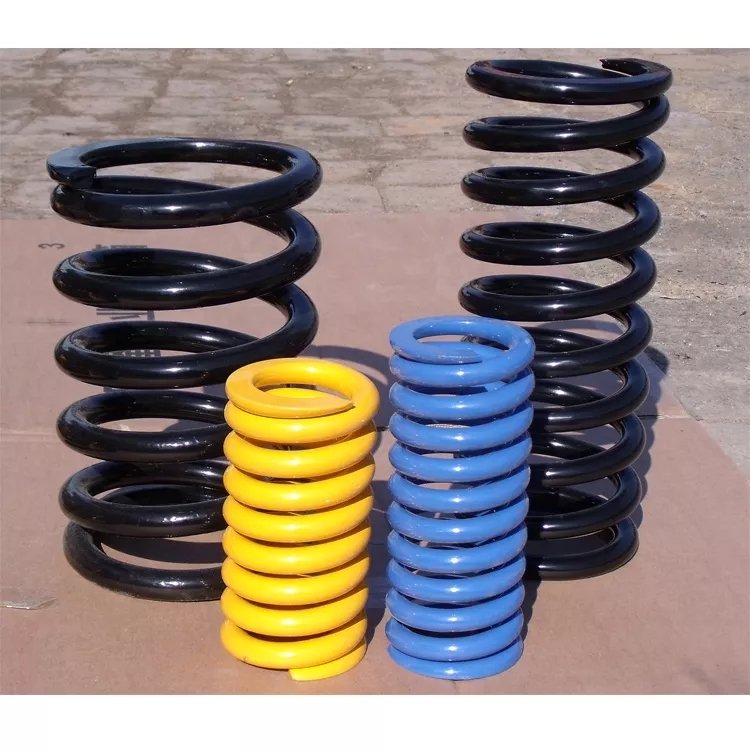
Body (secondary) suspension springs between bogie and car body — large hot-coiled springs built for heavy loads and long fatigue life.
What Are Secondary Suspension Springs?
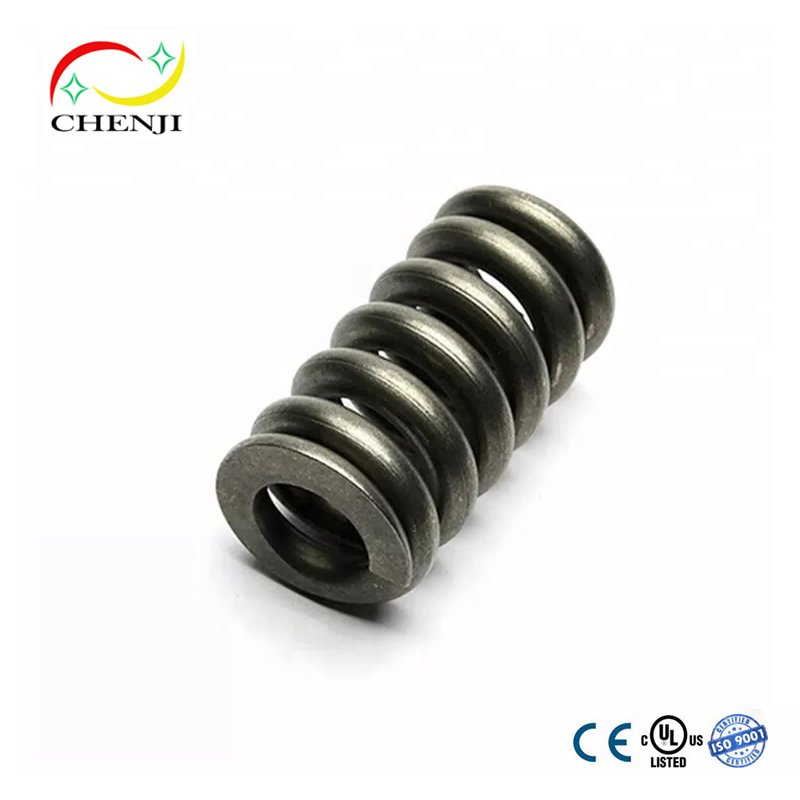
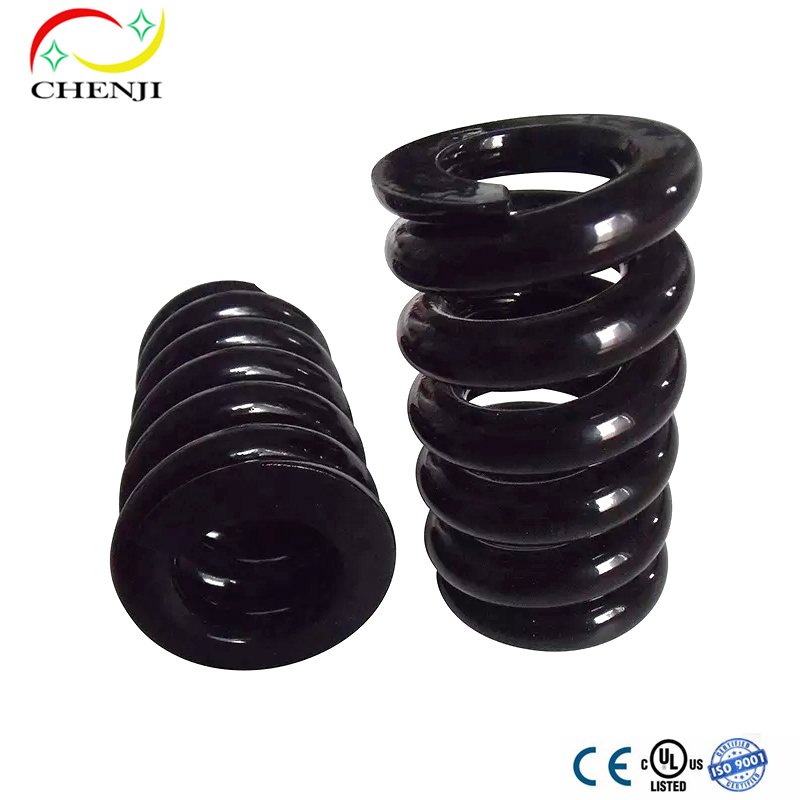
Secondary suspension springs — also called body springs — are the large helical compression springs mounted between the bogie and the car body on railway vehicles. They form the second stage of the suspension system, on top of the primary (axle box) stage.
Their job is to carry the mass of the car body, isolate passengers and freight from track-induced vibration and noise, and allow controlled relative movement between the body and the bogie as the vehicle runs through curves and track irregularities.
Because they support the entire car body, secondary springs are among the largest hot-coiled springs we manufacture, made from heavy spring steel bar and designed for high static loads combined with millions of fatigue cycles. They are produced to the customer’s drawing with full dimensional, load and fatigue validation.
Large-Dimension Design and Combined Configurations
Secondary springs are frequently designed as combined spring systems to fit the available space and achieve the required spring rate:
Parallel Arrangement
An outer spring and an inner spring nested coaxially work in parallel to raise load capacity within a limited height.
Series Arrangement
Springs arranged in series increase total deflection and soften the rate where the space envelope requires it.
Nested and Double-Coil Designs
Multi-coil and nested designs provide redundant load paths and compact packaging for body suspension.
Technical Parameters
The parameters below are engineered for each secondary suspension spring. Exact values are always defined by the customer’s drawing and confirmed by sample testing — send us your drawing and we will confirm every value, including tolerances.
| Wire diameter | Large bar sections for heavy load capacity — per drawing. |
| Outer / mean diameter | Governed by the body-to-bogie space envelope — per drawing. |
| Free height | Defined by installation height and preload requirements — per drawing. |
| Spring rate (stiffness) | Tuned to vehicle dynamics; confirmed by load testing of samples. |
| Number of coils | Active and total coils per drawing and rate calculation. |
| Ends | Closed and ground ends are standard for body springs. |
| Fatigue life | Designed and tested for millions of cycles; targets per specification. |
Materials
Secondary suspension springs are made from hot-worked spring steel grades selected for the drawing and service conditions. Common grades include:
50CrV4 — chromium-vanadium spring steel with excellent fatigue properties, widely specified for railway suspension springs.
60Si2MnA — silicon-manganese spring steel with high strength, commonly used in Chinese railway applications.
SUP9 — JIS silicon-manganese spring steel, a standard grade for vehicle suspension springs.
SAE 5160 — chromium-silicon-manganese spring steel widely used in American-type suspension designs.
Other grades can be supplied on request, and material certificates are available with each batch.
Fatigue Reliability
For a component that carries the whole vehicle body, fatigue reliability is the top priority. Our standard practice includes:
Controlled Heat Treatment
Quenching and tempering deliver consistent hardness and toughness across the coil section.
Shot Peening
Standard treatment to build compressive surface stress and extend fatigue life.
Pre-setting
Stabilizes free height under full service load before the spring leaves the factory.
Testing and Inspection
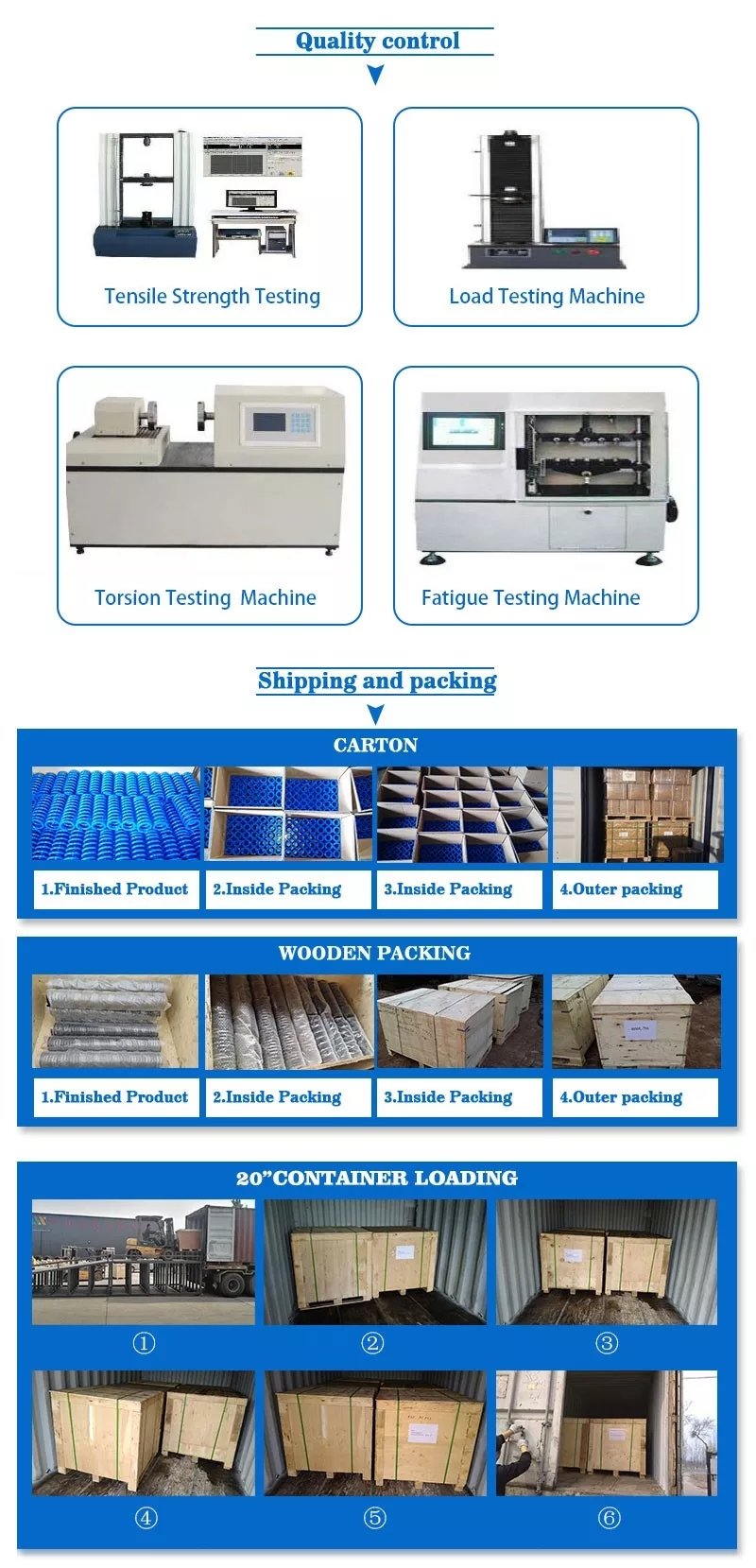
Load-rate testing, fatigue testing and magnetic particle inspection per drawing and standard.
Frequently Asked Questions
Q: What is the difference between secondary and primary suspension springs?
Secondary (body) springs sit between the bogie and the car body and carry the car body mass; primary (axle box) springs sit between the wheelset and the bogie frame. Both are manufactured by CHENJI.
Q: Can you manufacture combined spring systems (parallel or series)?
Yes. We support parallel, series, nested and double-coil arrangements. The configuration is defined by your drawing and the vehicle’s suspension tuning.
Q: What is the largest spring size you can produce?
Our hot-coiling line handles the large bar sections used in secondary suspension springs. Send us your drawing and we will confirm capability for your specific size.
Q: Which materials and standards do you support?
Common grades are 50CrV4, 60Si2MnA, SUP9 and SAE 5160, with production and testing to DIN, UIC, EN, JIS and GB/T requirements per drawing.
Q: How do you test fatigue life?
Fatigue testing machines are used to validate sample designs per specification, and batch production includes load-rate and dimensional inspection.
Discuss Your Secondary Spring Project
Send your drawing and our engineers will confirm design, material, testing and delivery for your body spring requirement.
Related Applications
CRCC Railway Product Certified
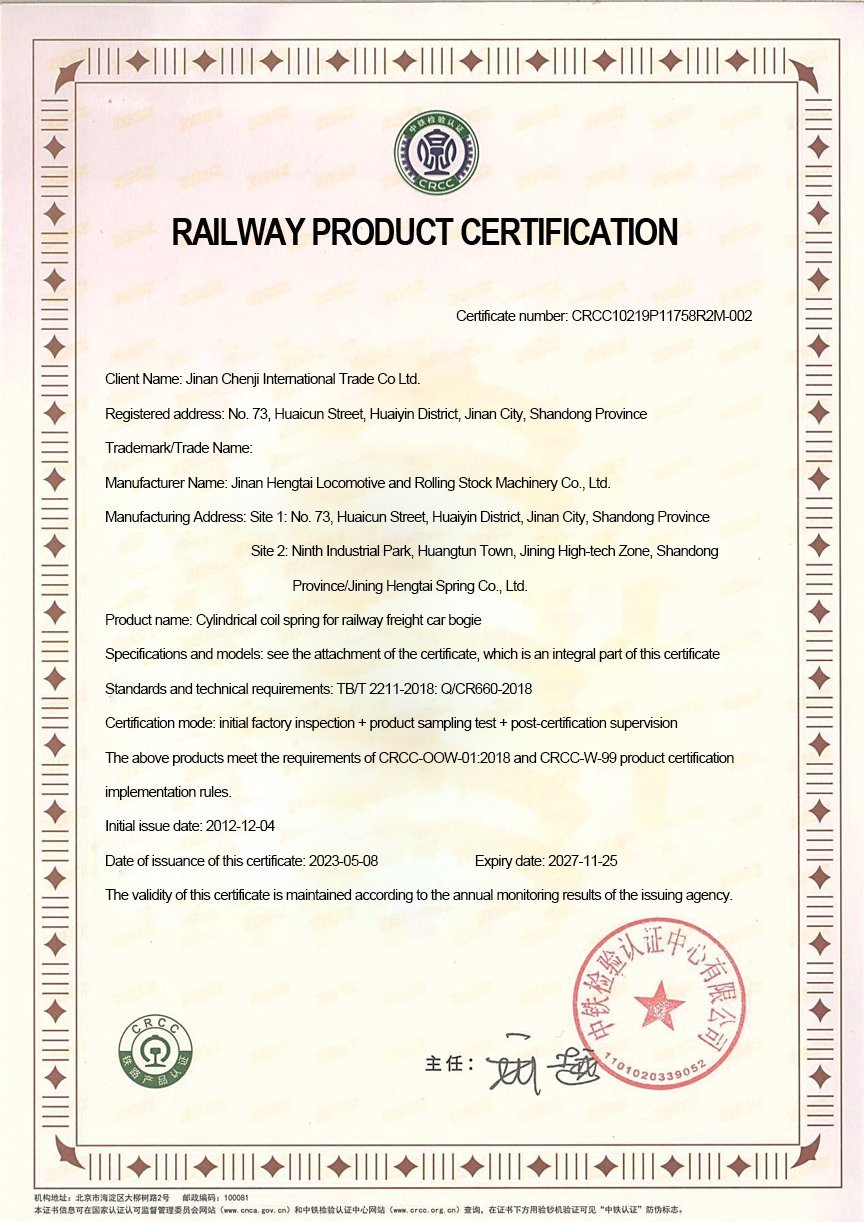
These springs are covered by the CRCC railway product certification held by CHENJI, confirming compliance with Chinese railway product certification rules.
- Certificate No.: CRCC10219P11758R2M
- Manufacturing standard: TB/T 2211-2016, Q/CR660-2018
- Valid until: 25 November 2027