
Spring Standards by Region: DIN, EN, JIS, GB & ASTM
DIN, EN, JIS, GB and ASTM – the standards that govern spring manufacturing, materials and tolerances, explained for buyers and designers.
Why Spring Standards Matter
Every industrial spring is made to a standard. The standard fixes the material, the manufacturing process, the key dimensions and the tolerances – so a spring made in one country can be verified, inspected and replaced anywhere in the world.
Five systems dominate the market: German DIN (now largely superseded by European EN), European EN, Japanese JIS, Chinese GB/T and American ASTM. This guide maps the standards you will meet on drawings and explains what each one covers.
Many national standards are harmonised. DIN spring standards have been replaced by EN versions, and EN and ISO texts are increasingly identical. Where a standard has been superseded we note the current version.
Manufacturing and Quality Standards
Standards that define how helical springs are made, measured and tolerated.
| DIN 2095 | Cold coiled helical compression springs from round wire – quality requirements including tolerances (still widely quoted on drawings). |
| DIN 2096-1 | Hot coiled compression springs from round wire and bar – quality requirements including tolerances. |
| DIN 2097 | Cold formed helical extension (tension) springs – quality requirements. |
| EN 13906-1:2013 | Cylindrical helical springs from round wire and bar – calculation and design of compression springs. |
| EN 13906-2:2013 | Calculation and design of helical extension (tension) springs. |
| EN 13906-3:2014 | Calculation and design of helical torsion springs. |
| JIS B 2704-1/-2 | Coil springs – basic calculation methods and expression of specifications (current Japanese design standard). |
| JIS B 2707 / B 2708 | Cold formed helical compression springs / cold formed helical extension springs. |
| JIS B 2709-1 | Helical torsion springs. |
| GB/T 1239.2 / .1 / .3 | Cold coiled cylindrical helical springs, technical specifications – compression (Part 2), extension (Part 1) and torsion (Part 3). |
| EN 16983 / EN 16984 | Disc springs – quality/specification and calculation (former DIN 2093 and DIN 2092, withdrawn 2017). |
Wire and Material Standards
Material standards define the wire grades, tensile ranges and surface quality used to make springs.
American: ASTM A228 (music wire), A227 (hard drawn), A229 (oil-tempered), A230 (oil-tempered valve spring quality), A231 (chromium-vanadium), A232 (Cr-V valve spring quality), A401 (chromium-silicon) and A313 (stainless steel spring wire).
European: EN 10270-1 (patented cold drawn wire), EN 10270-2 (oil hardened and tempered wire) and EN 10270-3 (stainless steel wire).
Japanese: JIS G 3522 (piano wire), G 3521 (hard drawn wire), G 3560 (oil-tempered wire), G 3561 (valve spring oil-tempered wire) and G 4314 (stainless steel wires for springs).
Chinese: GB/T 4357 (cold drawn carbon spring steel wire), GB/T 18983 (oil hardened and tempered spring steel wire), GB/T 4240 (stainless steel wire) and GB/T 1222 (spring steels, bars and rounds).
A full grade cross-reference table is published in our Spring Steel Materials Guide.
How Tolerances Work
Spring tolerances are included in the manufacturing standards. DIN 2095 and DIN 2096 define tolerance grades for cold and hot coiled compression springs, the GB/T 1239 series defines tolerances for cold coiled cylindrical springs, and the EN 13906 series sets out calculation rules together with allowable deviations.
Spring tolerances are wider than machined-part tolerances – a free-length tolerance of about +/-2-5% is normal for a cold coiled compression spring. Specify only the dimensions that matter functionally, and agree realistic values with the manufacturer before production. More guidance is in our Engineering Notes and Tolerances guide.
Frequently Asked Questions
Q: Is DIN still used today?
Many DIN spring standards were replaced by EN versions, but DIN numbers such as DIN 2095, 2096 and 2097 are still quoted on drawings across Europe and Asia. We work to both systems.
Q: Which standard should I specify for an export product?
Match the market: EN for Europe, JIS for Japan, ASTM for North America, GB/T for China. For a global product, EN or JIS are the most common neutral choices. We manufacture and certify to any of them.
Q: Do you provide certificates and inspection reports?
Yes. Material mill certificates, dimensional inspection reports and test records can be provided on request, and we can inspect to the tolerance grades of the standard you specify.
Q: Which spring standard should I use for my design?
Choose the standard your end market or customer expects. EN 13906 / DIN 2095 for Europe, JIS B 2704 for Japan, ASTM (A228, A229, A401) for North America, and the GB/T 1239 / GB/T 23935 series for China. If your drawing already quotes a standard, we build and inspect to it.
Q: What does DIN 2095 cover?
DIN 2095 specifies cold coiled helical compression springs made from round wire: the design calculation and the permissible tolerance grades for wire diameter, outside diameter, length, squareness and load, together with the permitted material ranges. EN 13906-1 supersedes it in Europe, but DIN 2095 numbers are still widely quoted on drawings.
Q: What is the difference between EN 13906-1, -2 and -3?
EN 13906 is split by spring type. Part 1 covers cylindrical helical compression springs (cold and hot coiled), Part 2 covers cylindrical helical tension springs, and Part 3 covers cylindrical helical torsion springs. Each part gives the design calculation plus the tolerance grades for that spring type.
Q: Do your springs conform to ASTM or GB standards?
Yes. We manufacture to ASTM grades (A228 music wire, A227 hard drawn, A229 oil tempered, A231 Cr-V, A401 chrome silicon, A313 stainless) and to the Chinese GB/T spring series, and we can supply mill certificates and dimensional inspection reports against either system.
Q: Can you supply springs to a customer-specified standard?
Yes. Send your drawing with the standard quoted and we will confirm compliance, tolerances and documentation before production. If no standard is given, we will recommend the closest equivalent for your market.
Building to Your Standard
Send your drawings with the standard quoted, and we will confirm compliance, tolerances and documentation before production.
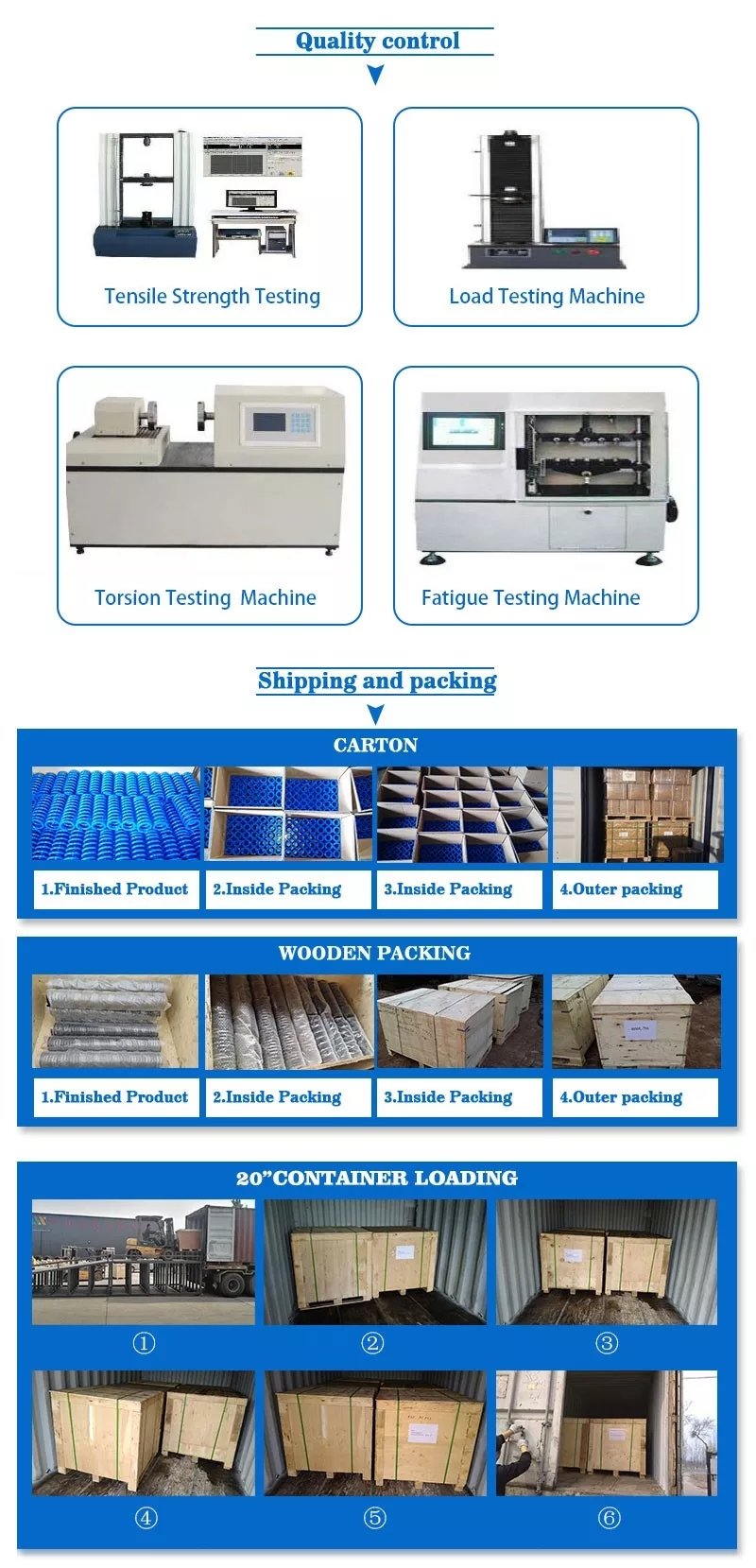
Quality Control & Testing
Related Spring Resources
Compare DIN, EN, JIS, GB and ASTM spring standards now, see which steel is right for your spring in our spring steel wire grades guide, and calculate your spring rate with our free calculator. More engineering help lives in the technical resources hub.