
Primary Suspension Springs
Axle box (primary) suspension springs mounted between wheelset and bogie frame — hot-coiled, shot-peened and made to your drawing.
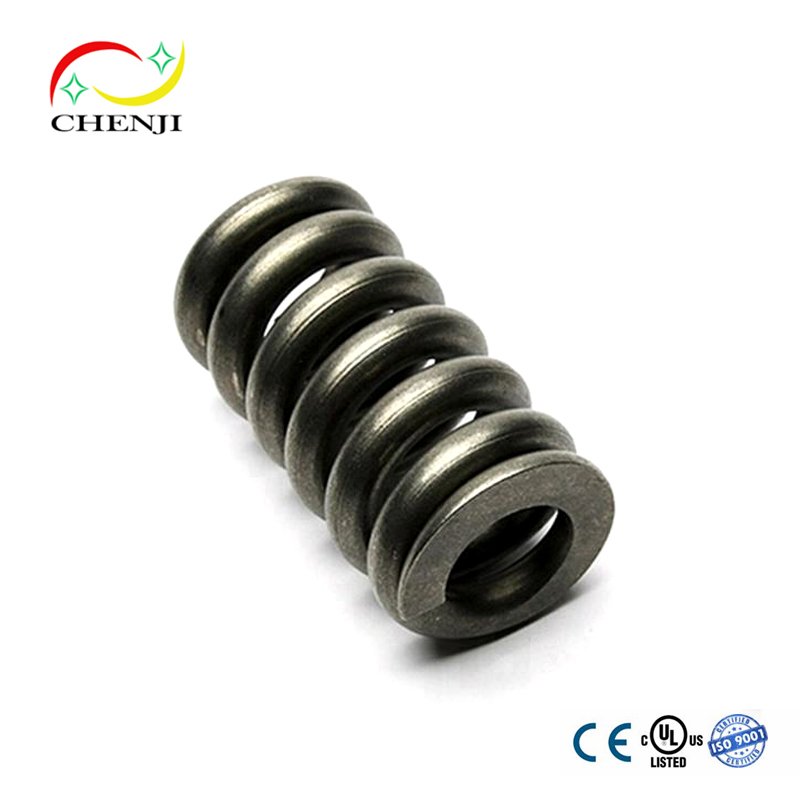
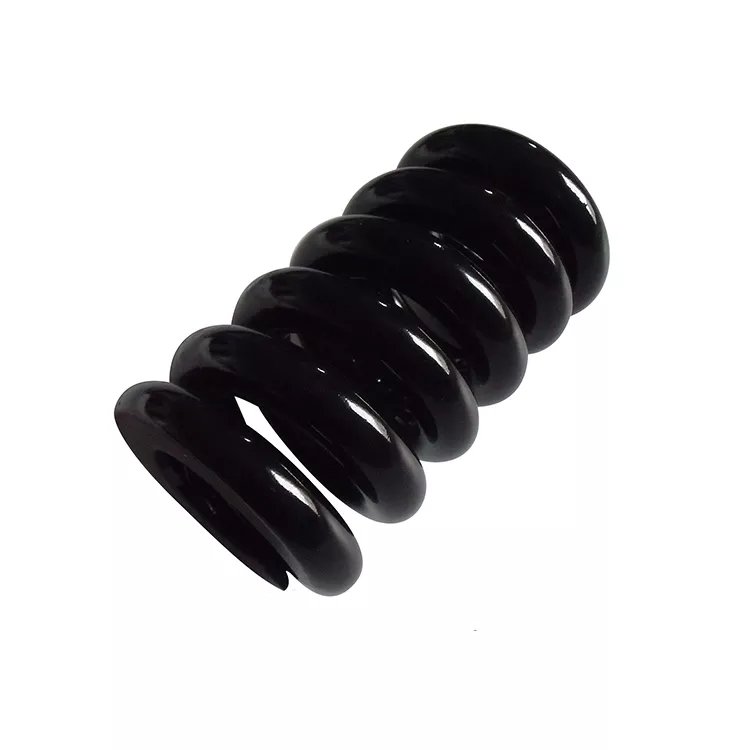
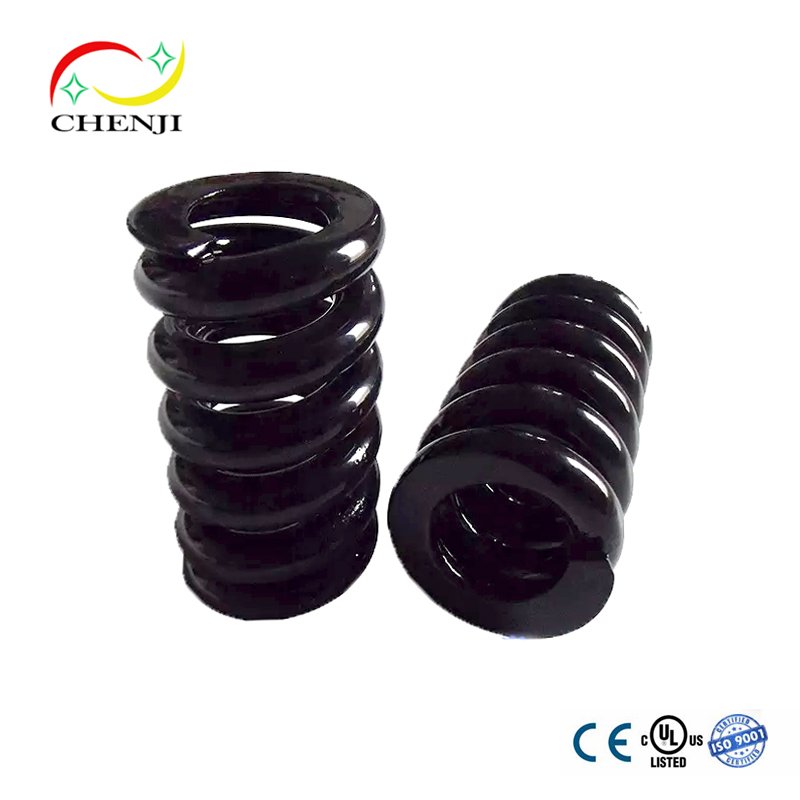
What Are Primary Suspension Springs?
Primary suspension springs — also called axle box springs — are the helical compression springs installed between the wheelset axle box and the bogie frame on railway vehicles. Together with the wheelsets, they form the first stage of the suspension system.
Their job is demanding. They carry the static weight of the vehicle through the wheels, distribute wheel load evenly between the rails, and guide the wheelset while absorbing track-induced shocks and high-frequency vibration. Because they sit so close to the wheel/rail interface, primary springs directly influence ride quality, wheel/rail forces and running stability.
Primary suspension springs are hot-coiled from spring steel bar and finished with ground ends, shot peening and pre-setting. They are manufactured to the customer’s drawing, and every production batch is dimensionally and load tested before delivery.
Technical Parameters
The parameters below are engineered for each primary suspension spring. Exact values are always defined by the customer’s drawing and confirmed by sample testing — send us your drawing and we will confirm every value, including tolerances.
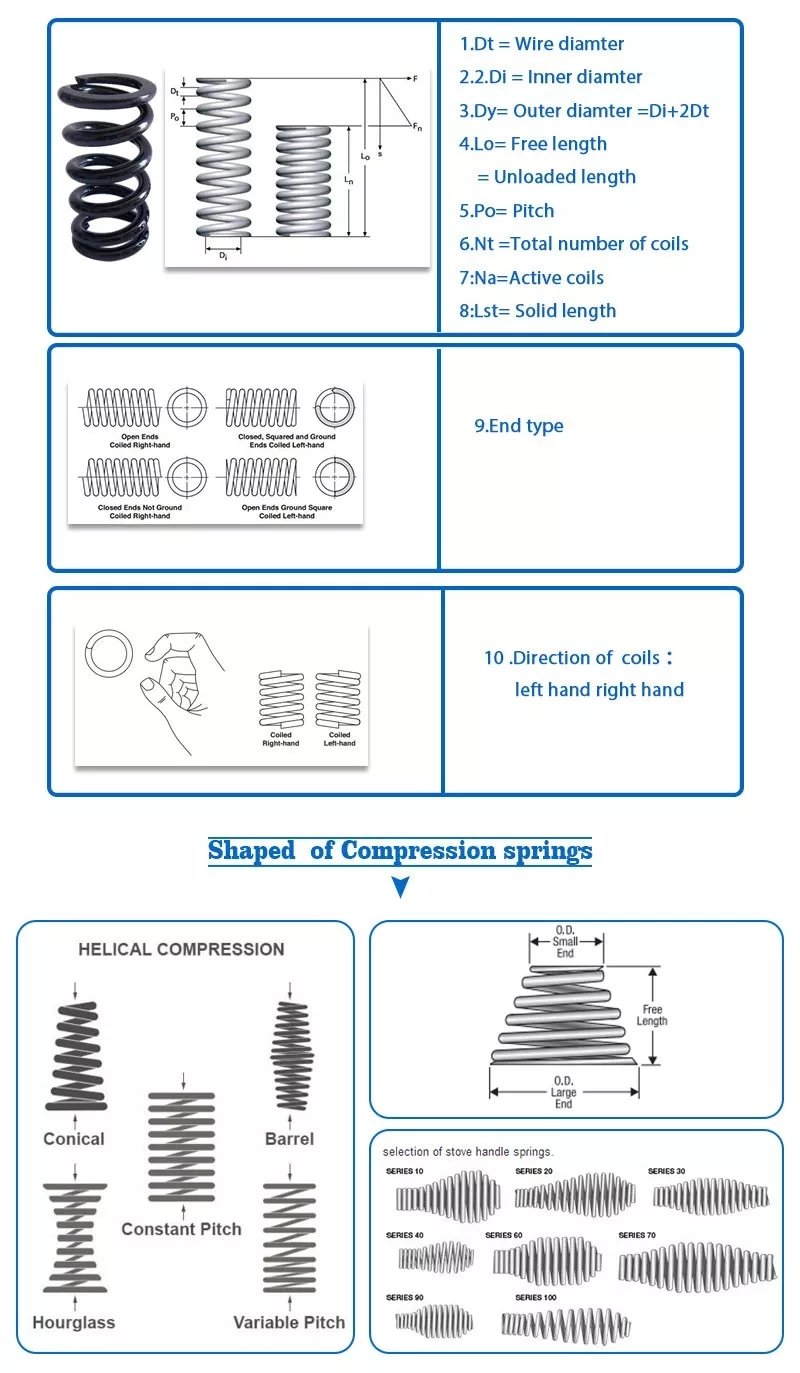
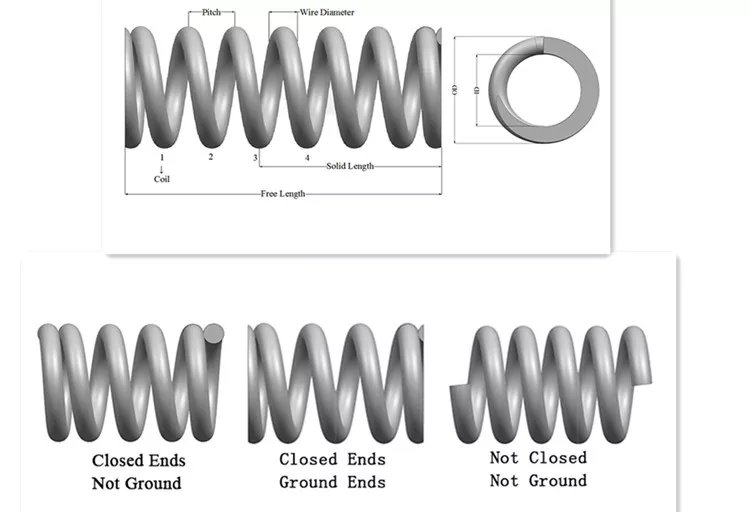
| Wire diameter | Selected according to load and fatigue requirements — specify on your drawing. |
| Outer / mean diameter | Governed by the axle box space envelope — per drawing. |
| Free length | Defined by installation height and preload requirements — per drawing. |
| Spring rate (stiffness) | Calculated from vehicle mass and suspension tuning; confirmed by load testing of samples. |
| Solid height | Checked against stroke limits to prevent coil binding in service. |
| Fatigue life | Design target per customer specification and applicable standard; validated by fatigue testing. |
| Ends | Closed and ground ends are standard for railway primary springs. |
| Direction of coiling | Left- or right-hand helix per drawing. |
Materials
Primary suspension springs are made from hot-worked spring steel grades selected for the drawing and service conditions. Common grades include:
50CrV4 — chromium-vanadium spring steel with excellent fatigue properties and good toughness, widely specified for railway suspension springs.
60Si2MnA — silicon-manganese spring steel with high strength, commonly used in Chinese railway applications.
SUP9 — JIS silicon-manganese spring steel, a standard grade for vehicle suspension springs.
SAE 5160 — chromium-silicon-manganese spring steel widely used in American-type suspension designs.
Other grades can be supplied on request. Material certificates and chemical composition reports are available with each batch.
Process Features for Reliability
Every primary suspension spring is manufactured with reliability-focused process steps:
Shot Peening
Builds compressive residual stress on the spring surface, significantly improving fatigue life.
Pre-setting (Scragging)
Each spring is compressed beyond yield to stabilize free height and prevent sag in service.
Protective Coating
Black oxide, painting or anti-corrosion finishes can be applied per drawing and environment.
100% Inspection
Dimensional, load-rate and magnetic particle inspection on critical springs.
Frequently Asked Questions
Q: What is a primary suspension spring?
A primary suspension spring (axle box spring) is the helical spring mounted between the wheelset axle box and the bogie frame. It carries vehicle weight at the wheels, distributes wheel loads and absorbs track-induced shocks.
Q: Can you manufacture primary springs to our drawing?
Yes. We produce strictly to customer drawings and specifications. Send your drawing (PDF or DWG) and we will confirm material, dimensions, load requirements and testing scope.
Q: Which materials do you recommend?
Common grades for primary suspension springs are 50CrV4, 60Si2MnA, SUP9 and SAE 5160. The final choice depends on the drawing, service loads and the applicable standard.
Q: How do you verify stiffness and fatigue life?
Samples are load tested to confirm the spring rate, and fatigue testing can be performed per specification. Batch production includes dimensional and load-rate inspection.
Q: What surface treatments do you offer?
Black oxide, painting and epoxy or anti-corrosion coatings can be applied per drawing and service environment.
Send Your Primary Spring Drawing
Get a proposal with material selection, process plan and testing scope for your axle box spring project.
Related Applications
CRCC Railway Product Certified
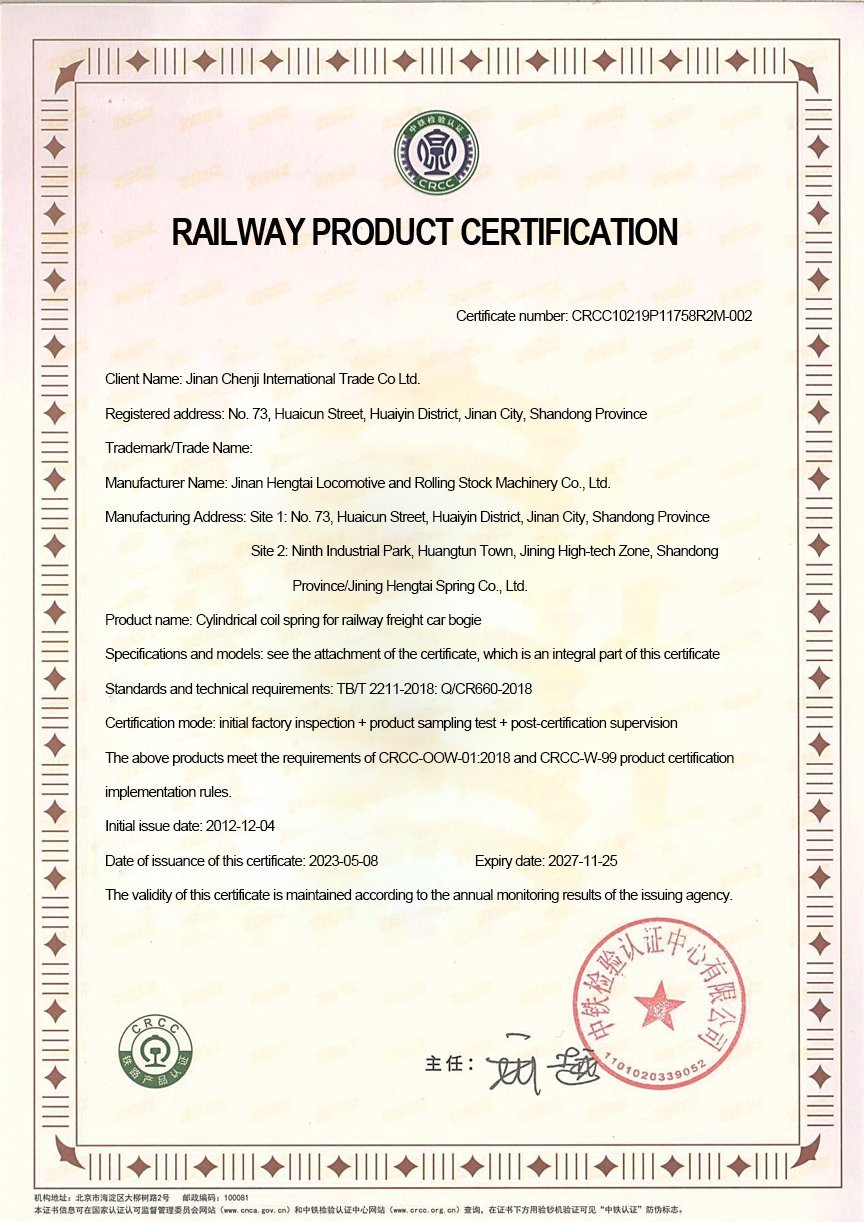
These springs are covered by the CRCC railway product certification held by CHENJI, confirming compliance with Chinese railway product certification rules.
- Certificate No.: CRCC10219P11758R2M
- Manufacturing standard: TB/T 2211-2016, Q/CR660-2018
- Valid until: 25 November 2027