
Railway Transit Springs: Bogie & Train Suspension Coil Springs
Engineered train suspension coil springs and bogie suspension springs for passenger, commuter and freight railway systems.
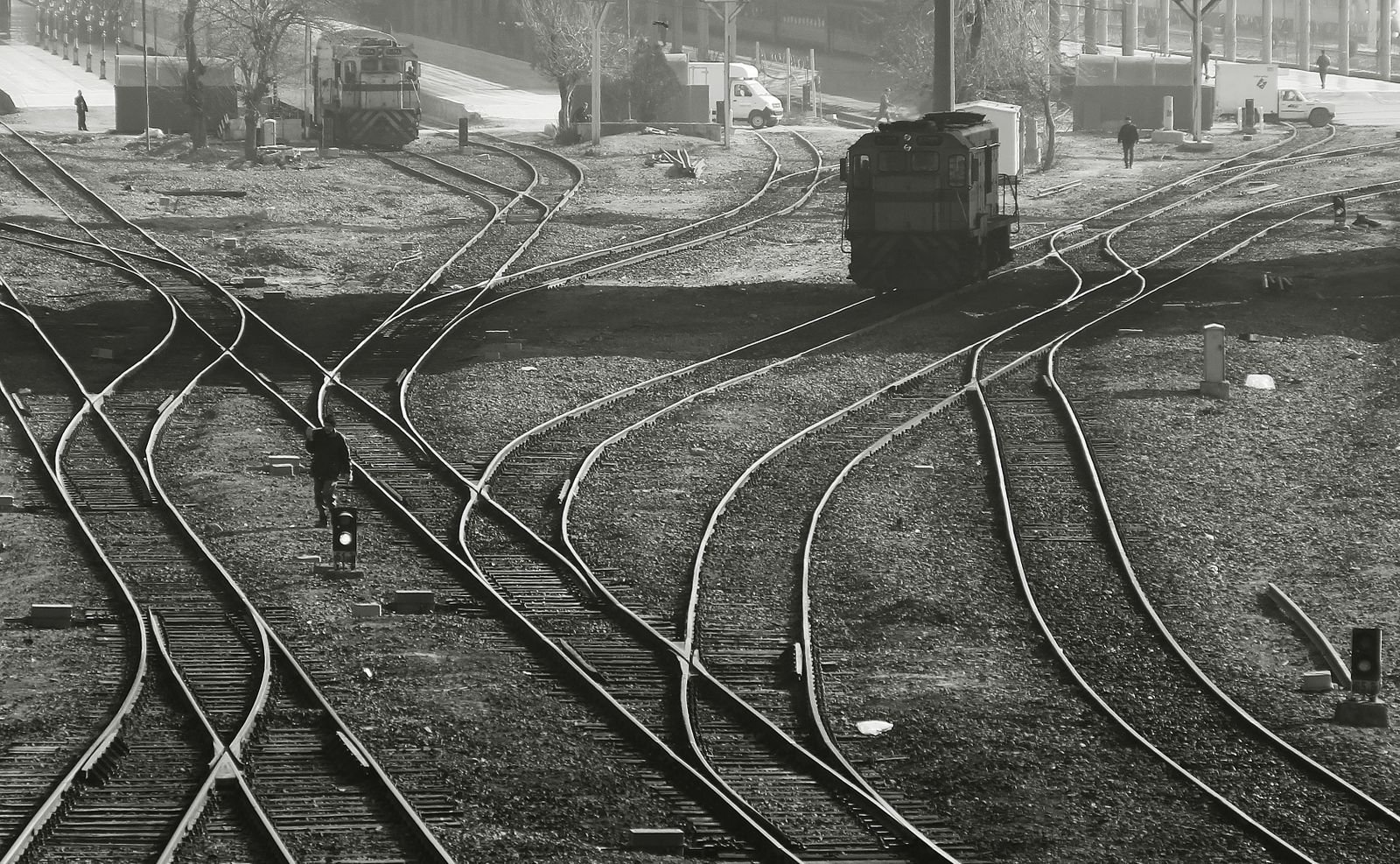
Railway Transit Spring Solutions
CHENJI is a railway suspension springs manufacturer serving OEM and aftermarket partners across the railway sector. Our product range covers the primary and secondary suspension systems of modern bogies, where dimensional accuracy and fatigue resistance directly affect ride quality, component life and track safety. Typical applications include mainline locomotives, passenger coaches, metro and commuter trains, and freight wagons.
Where train suspension springs work
Every wheelset runs on two layers of springing. The primary suspension sits close to the axle box and cushions high-frequency track shock. The secondary suspension sits between the bogie and the car body and governs ride comfort and body roll. A bogie suspension spring therefore has to hold a stable rate under continuous load, resist fatigue over a long service interval, and stay dimensionally stable in heat, cold and moisture. Free length, solid height and load at the installed height are the three dimensions most often controlled on a spring drawing.
Railway transit spring specification table
| Parameter | Typical value / range | Reference |
|---|---|---|
| Hot-coiled railway spring bar diameter | about 20–45 mm | Hot-coiled suspension springs |
| Plant wire/bar capability | 0.1–80 mm | CHENJI capability |
| Hardness after quench & temper | 40–50 HRC | Q&T spring steel |
| Hot-coiled alloy spring steel | 60Si2Mn, 51CrV4 | Alloy spring steel |
| Coil spring design | k = G d⁴ / (8 D³ n) | EN 13906-1 |
| Fatigue treatment | Shot peening | — |
| Wire torsion acceptance test | Simple torsion test | GB/T 239.1 |
| Corrosion protection | Zinc-nickel, zinc flake, epoxy powder | ASTM B117 salt spray |
| Railway product certification | CRCC10219P11758R2M (to 25 Nov 2027) | TB/T 2211-2016 |
| Quality system | ISO 9001: 626024QH073R1 | — |
| Factory audit | Bureau Veritas MIC-ASR2451820 | — |
| Surface / crack checks | Decarburisation, magnetic particle inspection | Safety-critical parts |
Values above are typical for railway suspension work and are confirmed per customer drawing before production.
Materials and manufacturing process
Railway suspension springs are hot-coiled from alloy spring steels such as 60Si2Mn and 51CrV4, then quenched and tempered to a typical 40–50 HRC working hardness. To raise fatigue strength the springs are shot peened, which is widely applied to suspension springs for exactly this reason. Dimensional control is exercised on free length, solid height and load at the installed height, and the wire itself can be checked with the simple torsion test to GB/T 239.1. Surfaces are inspected for decarburisation and for cracks using magnetic particle inspection on safety-critical parts, and protective coatings such as zinc-nickel, zinc flake or epoxy powder are applied where the service environment demands corrosion resistance, verified if needed by salt spray testing to ASTM B117.
CHENJI has produced springs since 2014, runs 35 machines and 26–50 employees, and works from customer drawings to deliver springs that match the design intent. Our CRCC railway product certification CRCC10219P11758R2M is valid to 25 November 2027 and ISO 9001 certificate 626024QH073R1 covers the quality system.
Applications
Our train suspension coil springs are used on mainline locomotives, passenger coaches, metro and light-rail vehicles, and heavy freight wagons. For volume programs we can arrange staged deliveries aligned with your production or maintenance schedule, and for overhaul programs we supply replacement springs matched to the original specification.
CHENJI has supplied springs since 2014 from Jinan, China with 26–50 employees and 35 machines, and works to customer drawings and specifications so that every bogie suspension spring matches the design intent of the operator or builder.
Frequently asked questions
What is the difference between primary and secondary suspension springs?
In a modern bogie the primary (and axle-box) suspension sits closest to the wheelset and cushions the high-frequency track input, while the secondary suspension sits between the bogie frame and the car body and controls ride quality and body roll. CHENJI supplies coil springs for both positions, made to the customer drawing so that dimensions, load and rate match the design intent.
What size bar is used for railway suspension springs?
Hot-coiled railway suspension springs are commonly made from bar diameters of about 20–45 mm and are shot peened to improve fatigue life. Our plant covers a wire and bar diameter range of 0.1–80 mm with heat treatment up to 1500 °C.
Which materials and standards apply to railway springs?
Railway springs are commonly produced from alloy spring steels such as 60Si2Mn and 51CrV4, heat treated to the 40–50 HRC range. Coil spring design follows EN 13906-1, and acceptance testing frequently includes the simple torsion test of metallic wire to GB/T 239.1 as well as control of free length, solid height and load at the installed height.
Is your factory certified for railway supply?
Yes. CHENJI holds CRCC railway product certification CRCC10219P11758R2M, valid to 25 November 2027, and ISO 9001 certificate 626024QH073R1. The company has also been audited by Bureau Veritas (MIC-ASR2451820).
Can you support overhaul and maintenance programs?
Yes. As well as OEM production we supply replacement springs for overhaul and maintenance programs, matched to original specifications. We work from drawings or samples and can arrange staged deliveries to suit a maintenance schedule.
Related pages
- Railway Suspension Springs
- Primary Suspension Springs
- Secondary Suspension Springs
- Metro & Urban Rail Springs
Request a quotation
Send us your drawing, sample or specification — our engineering team will confirm feasibility and reply with a quotation. Email liu@chenjisprings.com or call / WhatsApp +86 158 5311 1612.
Key Applications
Bogie Suspension
Primary and secondary springs for passenger and freight bogies on long-distance and commuter routes.
Axle-Box Springs
Coil springs for axle-box and bolster suspension layouts that guide and cushion each wheelset.
Vibration Control
Springs that damp track-induced vibration and noise for a quieter, more stable ride.
Consistent Performance
Uniform spring rate across batches for predictable vehicle behaviour at every speed.
Maintenance Supply
Replacement springs for overhaul and maintenance programs, matched to original specifications.
Need Springs for Railway Transit?
Send us your drawings or requirements — we reply within 24 hours with a competitive quotation.