Spring Coatings and Finishes Guide
Protect springs against corrosion, improve fatigue life and meet specification – zinc, nickel, Dacromet, powder, e-coat, black oxide and phosphate explained.
Why Finish a Spring?
A bare carbon steel spring will rust within days in a humid atmosphere. Coatings and finishes protect the surface, extend service life, control friction and help the spring comply with automotive or industrial specifications.
The right finish depends on the environment (indoor, outdoor, marine), the duty (static or dynamic), dimensional tolerance, temperature and cost. This guide compares the common options so you can specify with confidence.
One caution applies to all plated springs: acid cleaning and plating can introduce hydrogen into hardened steel, causing hydrogen embrittlement. High-strength springs are baked after plating to drive the hydrogen out, or finished with zinc-flake methods that avoid the risk entirely.
Finish Options Compared
Zinc Plating
Thin sacrificial zinc layer, usually with a clear, yellow or black passivation. Low-cost general protection for indoor and mild outdoor service.
Nickel Plating
Bright, hard, corrosion-resistant surface with a premium look. Used for instruments, appliances, food-contact parts and marine hardware.
Dacromet (Zinc Flake)
Chromate-free zinc-aluminium flake coating with outstanding salt resistance and no hydrogen embrittlement risk. The standard choice for automotive springs and fasteners.
Powder Coating
Thick, tough, decorative polymer layer in any RAL colour. Excellent for large springs, garage door springs and outdoor equipment.
E-Coating
Uniform thin organic film applied by electrophoresis. Reaches internal surfaces and edges, giving good corrosion resistance at reasonable cost.
Black Oxide
Chemical conversion coating with a dark, oil-absorbing surface. Mostly cosmetic with mild corrosion protection; needs an oil or wax film.
Phosphate and Oil
Phosphate conversion layer plus oil or wax. A low-cost, thin protection used on many industrial springs and as a paint base.
Shot Peening
Not a coating but a mechanical surface treatment: shot blasting creates compressive residual stress that dramatically improves fatigue life for dynamic springs.
Choosing the Right Finish
Match the finish to the service environment:
Indoor and dry: black oxide or phosphate with oil – or no finish at all if the material is stainless. This is the lowest-cost option.
Outdoor and humid: zinc plating or e-coating; powder coating for heavy springs such as garage door and roller shutter door springs.
Marine and road salt: Dacromet zinc flake, nickel plating, or change the material to stainless steel.
Dynamic and fatigue-loaded: shot peening plus a thin coating such as Dacromet or e-coat. Thick plating on highly stressed springs can reduce fatigue life and should be discussed with the manufacturer.
Food and medical: stainless steel material is normally specified instead of a coating.
Tip: coatings add thickness. Confirm the coating thickness with your manufacturer when the spring must fit a tight bore, groove or assembly.
Finish Selection Reference
Guide values – confirm the exact coating class and thickness with your manufacturer.
| Black oxide + oil | Indoor, dry, low cost. Thin – no significant dimension change. |
| Phosphate + oil/wax | Indoor, mild outdoor. Thin. |
| Zinc plating | Indoor to mild outdoor. Thin, with passivation colour options. |
| E-coating | Outdoor, automotive. Thin and uniform, good edge coverage. |
| Nickel plating | Premium, food-contact, marine. Thin to moderate. |
| Dacromet zinc flake | Automotive, marine, road salt. Thin, no hydrogen embrittlement risk. |
| Powder coating | Heavy springs, outdoor equipment. Thick, tough, any RAL colour. |
| Shot peening | Fatigue improvement for dynamic springs. Mechanical treatment, not a coating. |
Frequently Asked Questions
Q: Why do plated springs still fail in service?
Corrosion usually starts at scratched areas, cut ends or damaged plating. Specify a thicker coating, Dacromet or stainless material for outdoor and marine duty, and handle springs carefully during assembly.
Q: What is hydrogen embrittlement?
Hydrogen absorbed during acid cleaning or plating can make hardened steel brittle, causing sudden fracture under load. Springs are baked after plating to remove hydrogen, or finished with zinc-flake coatings that do not generate it.
Q: Can you supply coloured finishes?
Yes. Powder coating can be supplied in any RAL colour, and zinc plating can be clear, yellow or black passivated to match your specification.
Get the Right Finish for Your Spring
Tell us the environment and duty, and we will recommend a finish and apply it in-house.
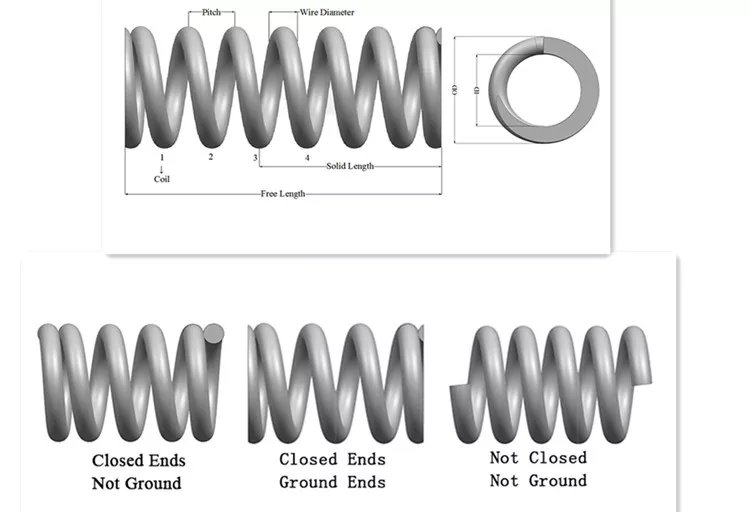
Spring End Types